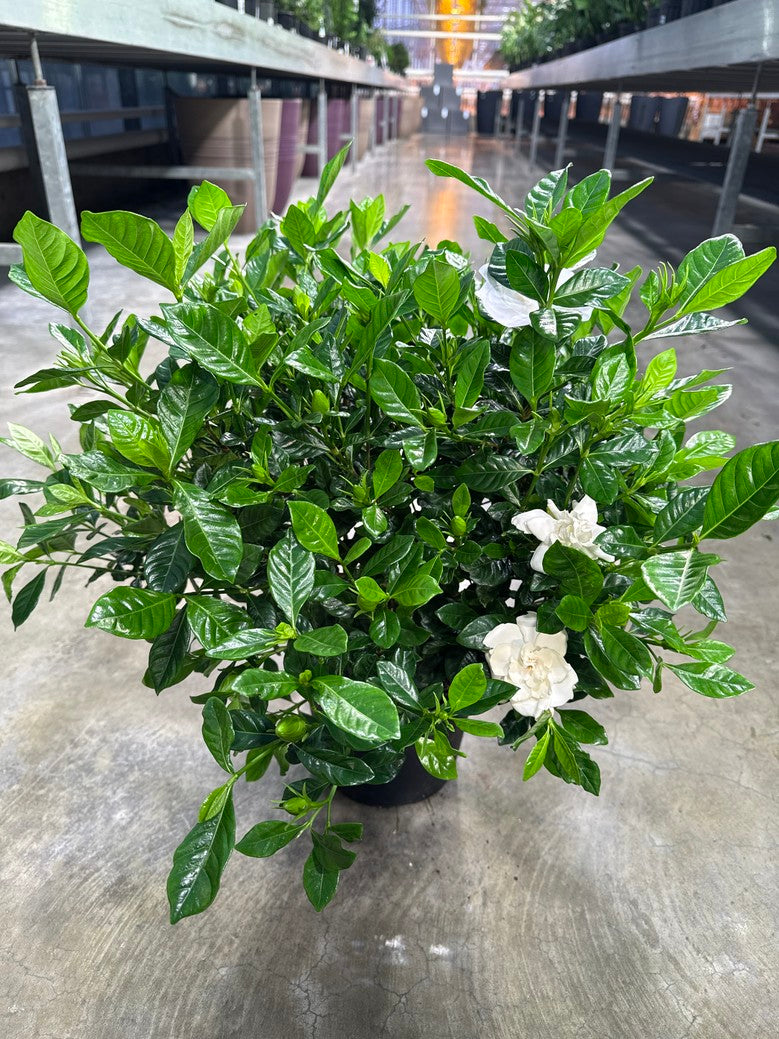
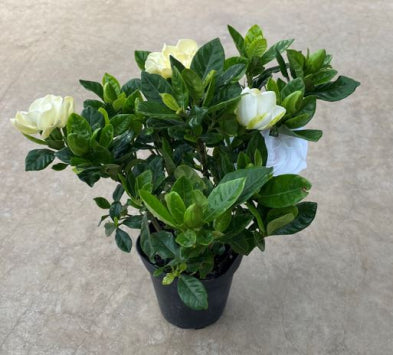
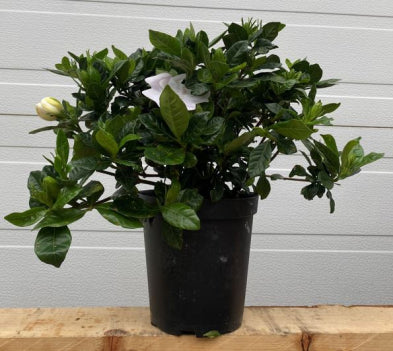
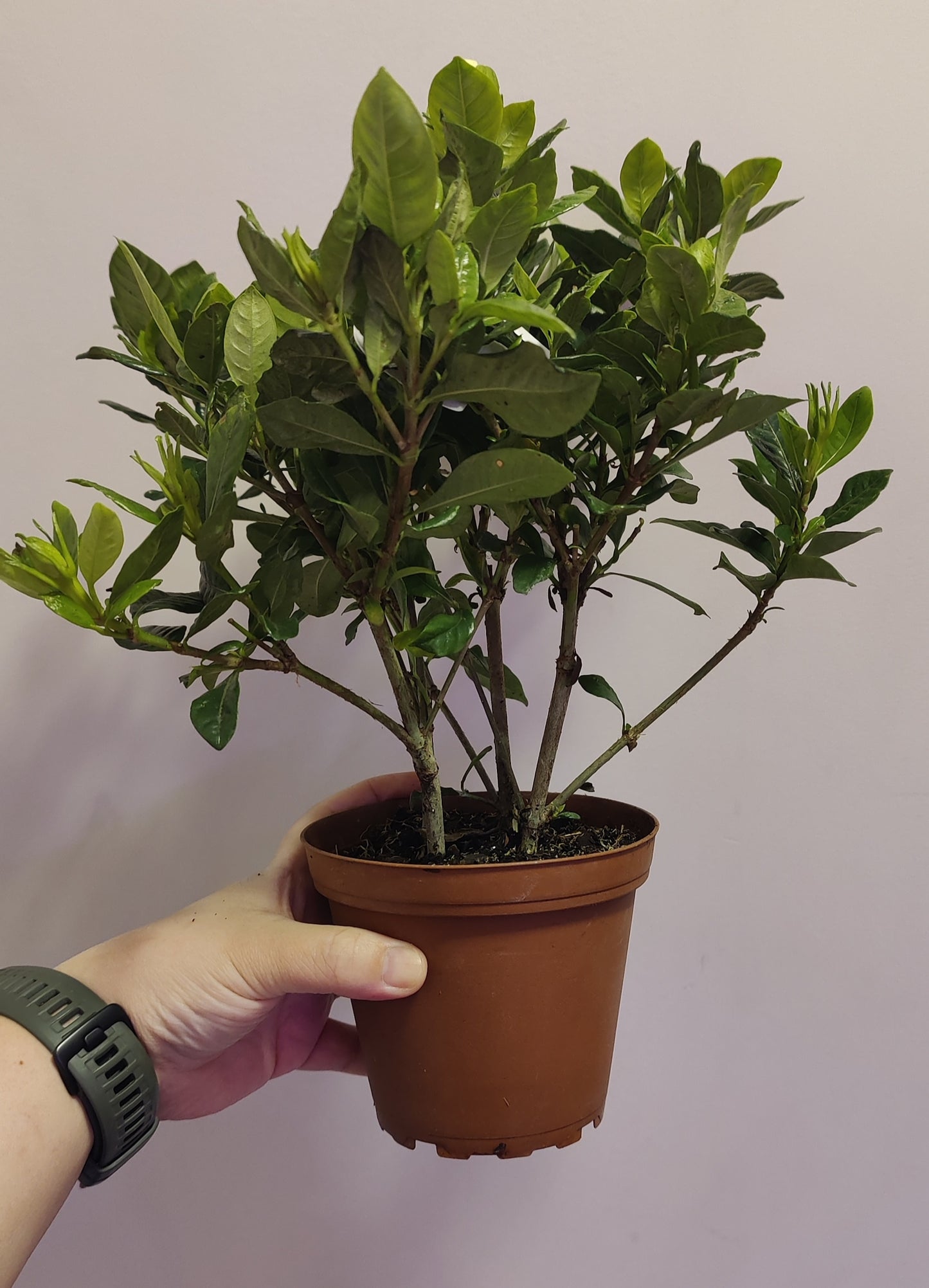
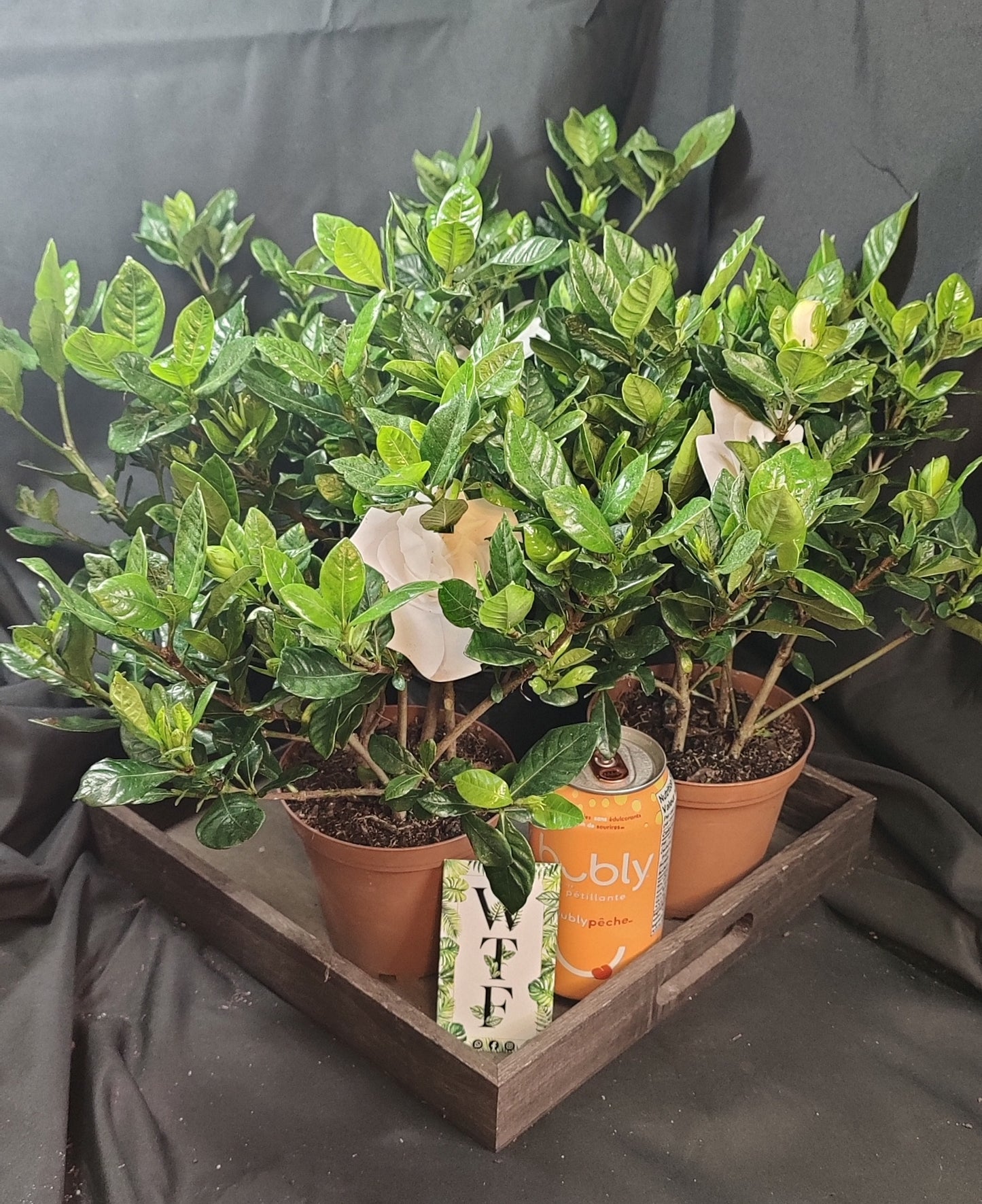
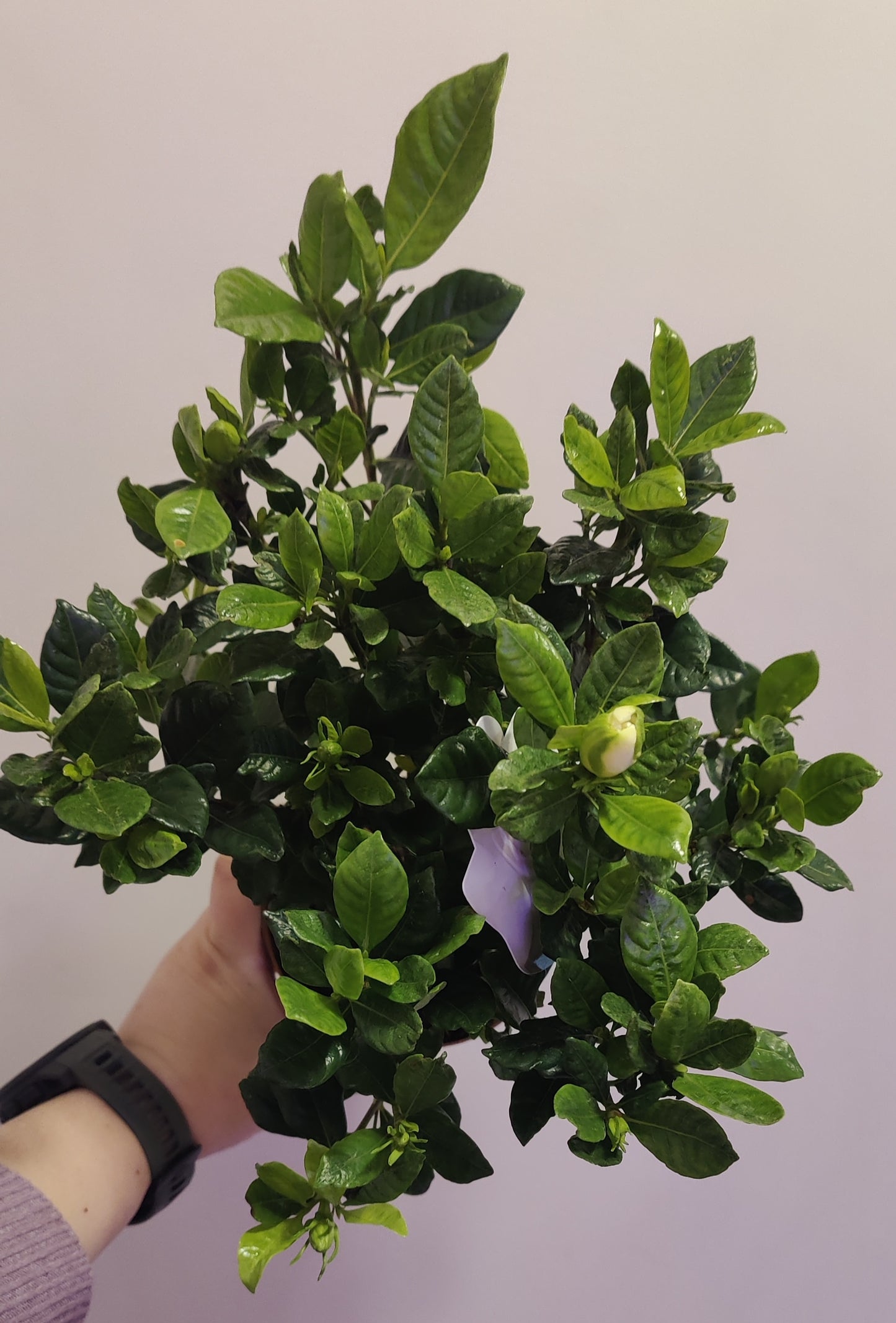
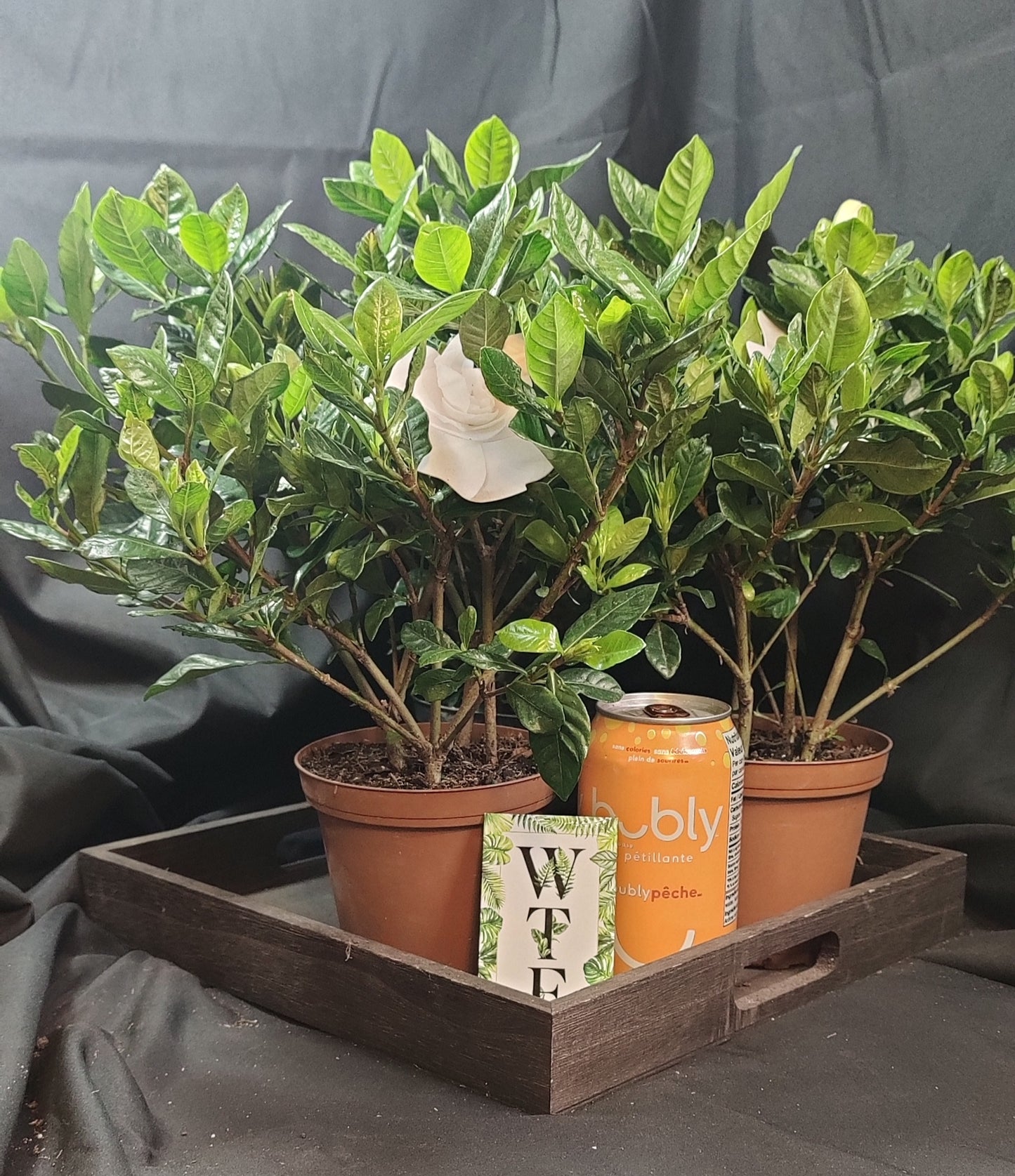
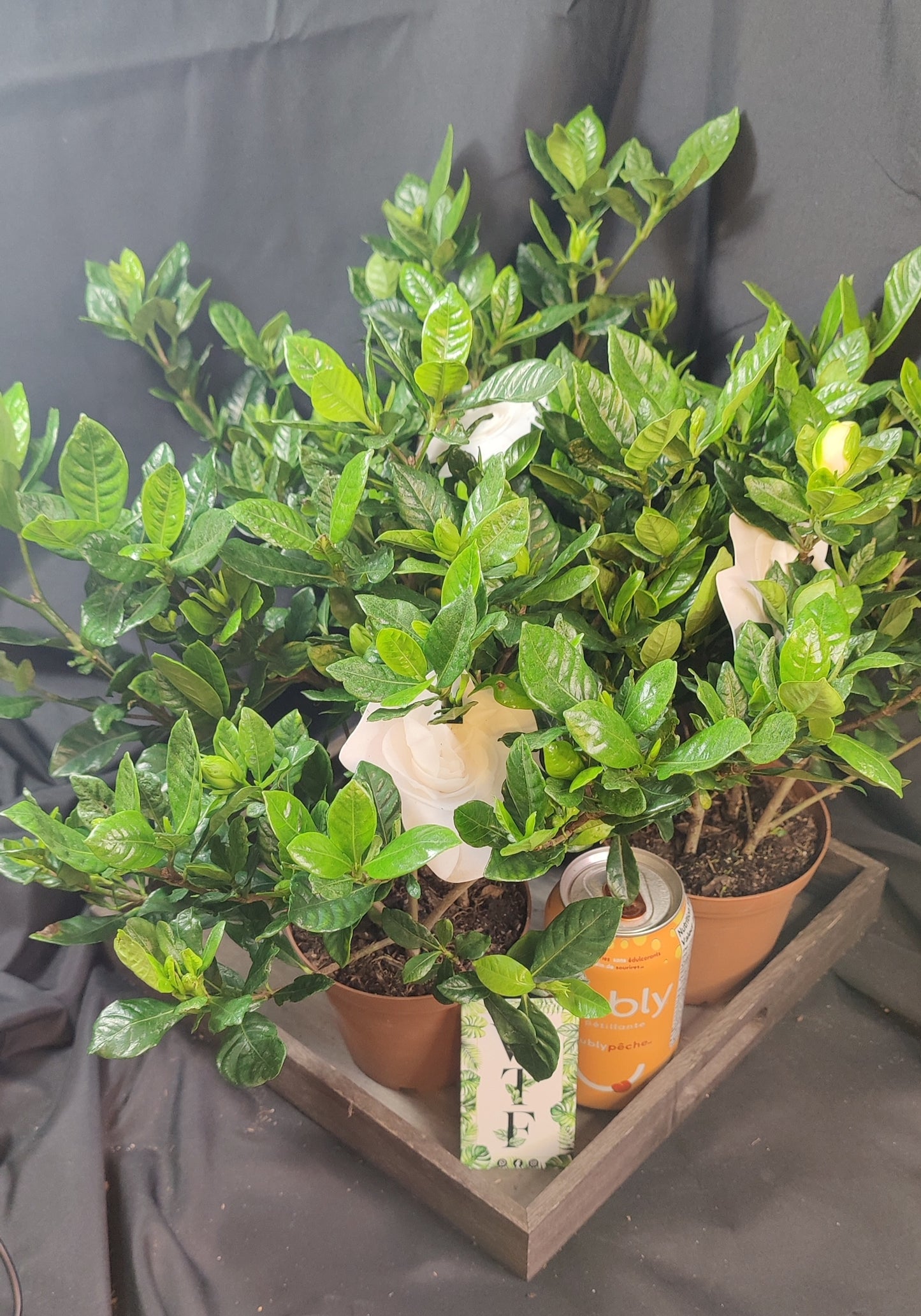
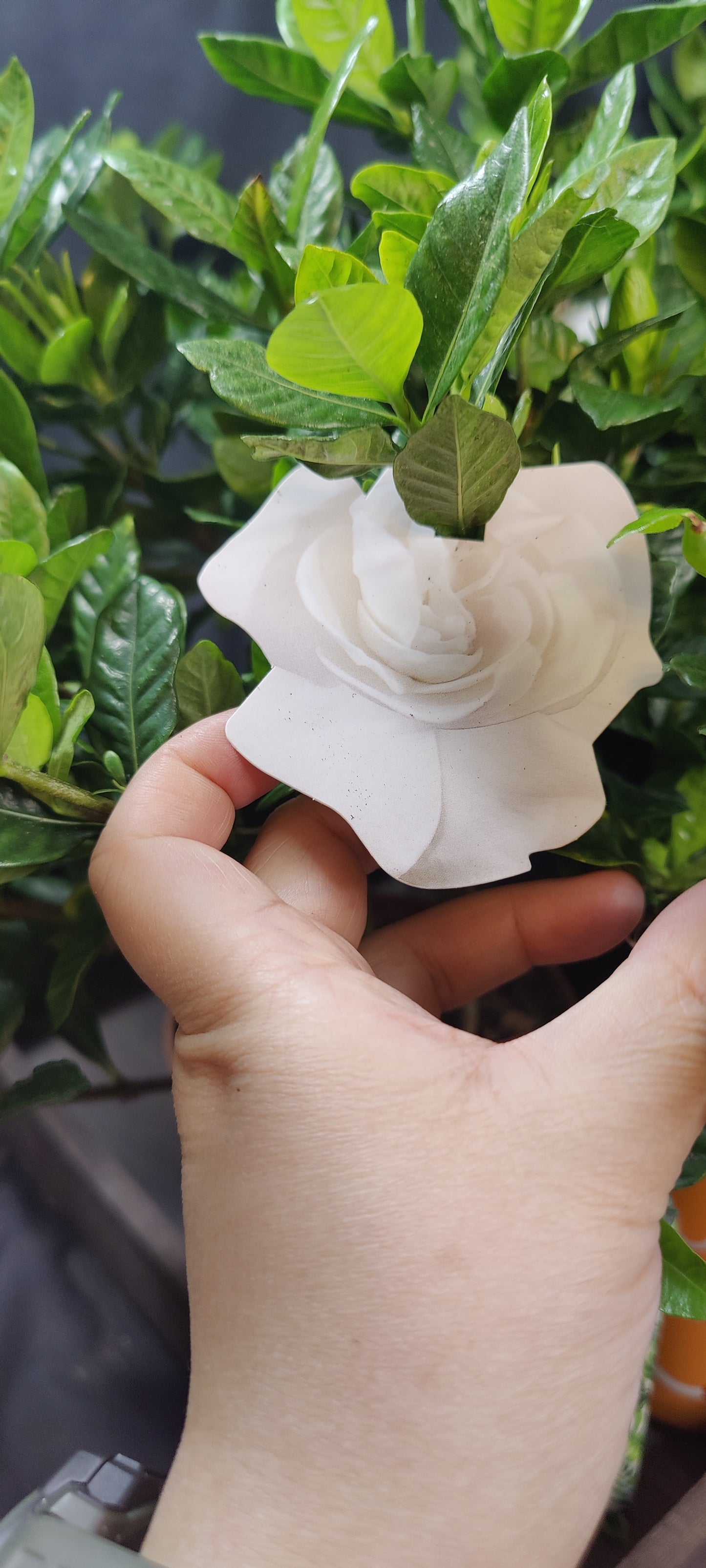
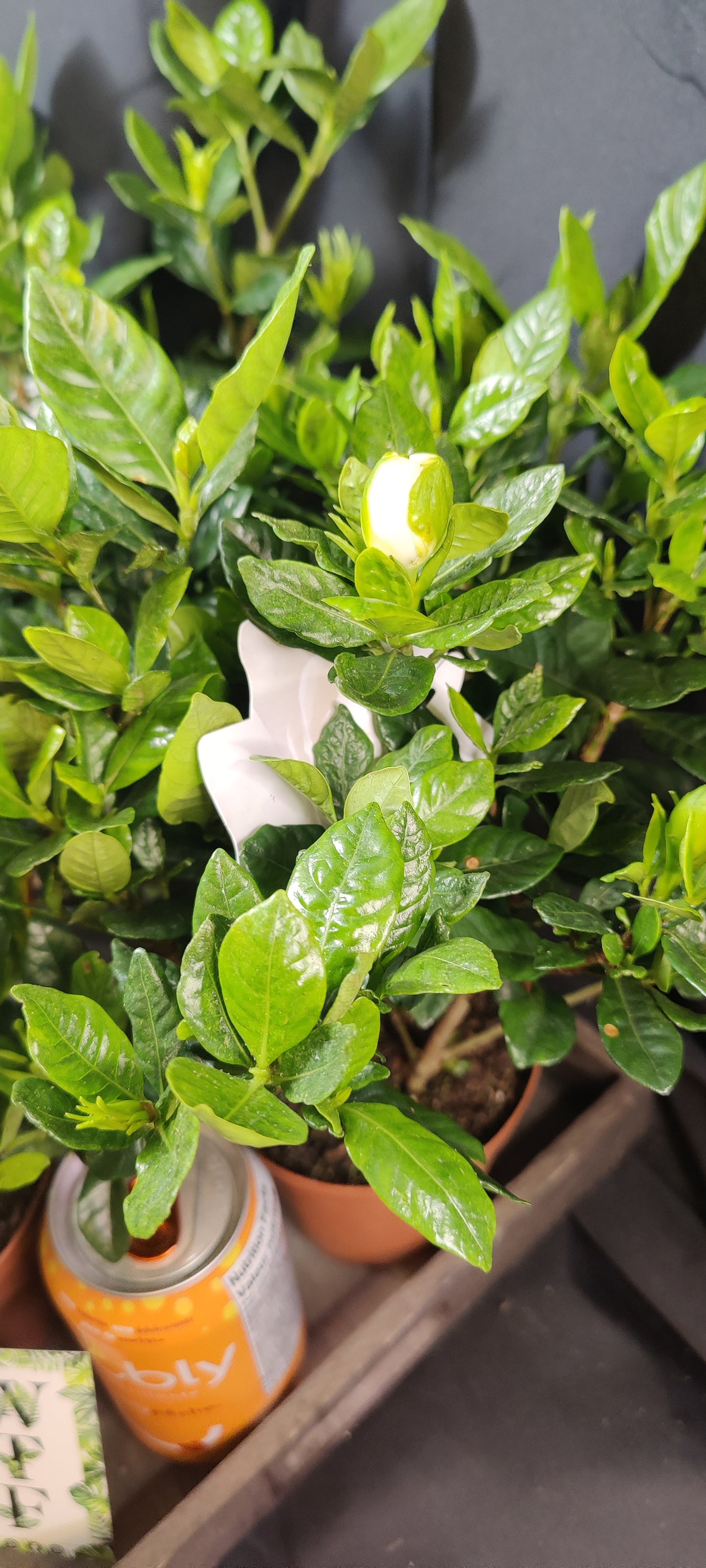
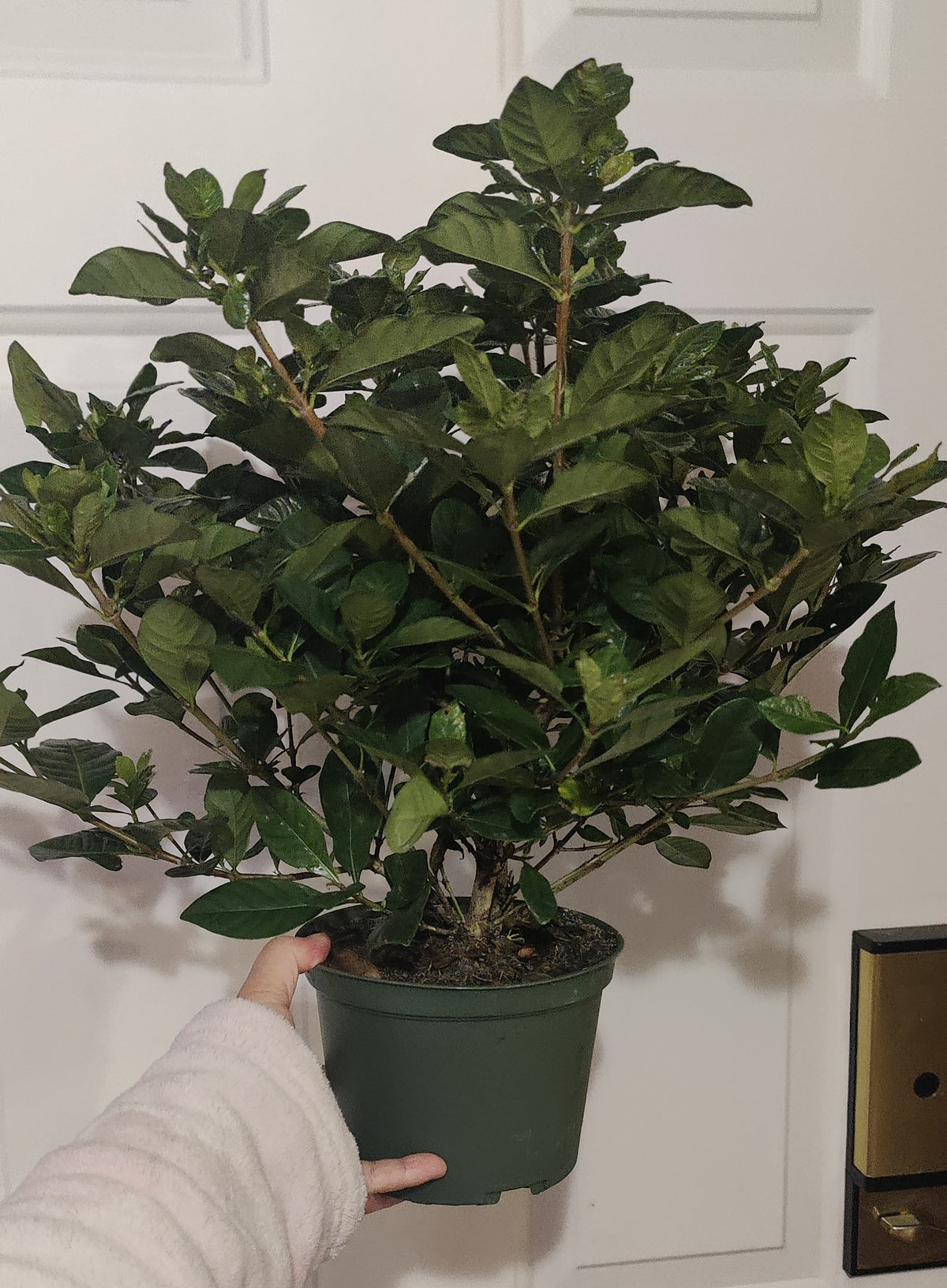
Gardenia jasminoides, commonly known as Cape Jasmine or Rose Jasmine, is a beautiful evergreen flowering shrub prized for its glossy, deep-green foliage and stunning creamy-white flowers. Its elegant blooms release an intoxicating sweet fragrance reminiscent of jasmine, making it a favourite among flowering plant enthusiasts. With the right care, Gardenias can reward you with beautiful blooms throughout the warmer growing season.
🌿 Plant Care Guide
Light
Prefers bright light with some direct morning sunlight.
Aim for approximately 4–6 hours of bright light daily.
Protect from intense afternoon sunlight.
Insufficient light can reduce flowering.
Water
Keep the soil consistently moist but never waterlogged.
Water when the top ½–1 inch of soil begins to dry.
Use filtered, rainwater, or distilled water when possible.
Avoid allowing the root ball to dry out completely.
Humidity
Prefers higher humidity (50–70% or more).
Benefits from a humidifier, especially during winter.
Grouping plants together can help increase humidity.
Provide good airflow to discourage fungal problems.
Temperature
Ideal temperature: 18–24°C.
Slightly cooler nighttime temperatures can encourage flowering.
Protect from cold drafts and sudden temperature changes.
Avoid frost and prolonged temperatures below 10°C.
Soil
Requires acidic, well-draining soil.
Ideal soil pH: 5.0–6.0.
Recommended mix:
Acid-loving plant potting mix
Peat moss or coco coir
Perlite
Fine pine bark
Fertilizer
Feed every 2–4 weeks during spring and summer.
Use a fertilizer formulated for acid-loving plants, such as azalea or gardenia fertilizer.
Avoid excessive fertilizer, which can damage roots.
Reduce feeding during fall and winter.
🌸 Encouraging Blooms
Provide plenty of bright indirect light and gentle morning sun.
Maintain consistent watering and humidity.
Avoid moving the plant once flower buds develop.
Keep temperatures relatively stable.
Maintain slightly acidic soil for healthy nutrient absorption.
🌱 Growth Habits
Growth habit: Evergreen flowering shrub.
Growth rate: Moderate.
Produces glossy, oval-shaped dark-green leaves.
Flowers are typically creamy white and highly fragrant.
Can produce single or double blooms depending on the cultivar.
Can be maintained as a compact potted plant with regular pruning.
⚠️ Common Problems
Yellow leaves with green veins: Often caused by iron deficiency from soil that is too alkaline.
Yellowing lower leaves: Overwatering or poor drainage.
Brown leaf edges: Low humidity, mineral buildup, or inconsistent watering.
Bud drop: Changes in temperature, insufficient light, or inconsistent watering.
No flowers: Insufficient light or excessive nitrogen fertilizer.
Sticky leaves: Possible scale insects or aphids.
❤️ Fun Fact
Gardenia flowers are famous for their intoxicating fragrance and are traditionally used in perfumes. Their beautiful white blooms also symbolize purity, love, and elegance.
Care Level: Intermediate to Advanced
Pet Friendly: No. Gardenias are generally considered non-toxic to cats and dogs, although ingestion may cause mild digestive upset.
Best For: Fragrant indoor displays, sunny rooms, patios during warm weather, and anyone who loves elegant flowering plants.